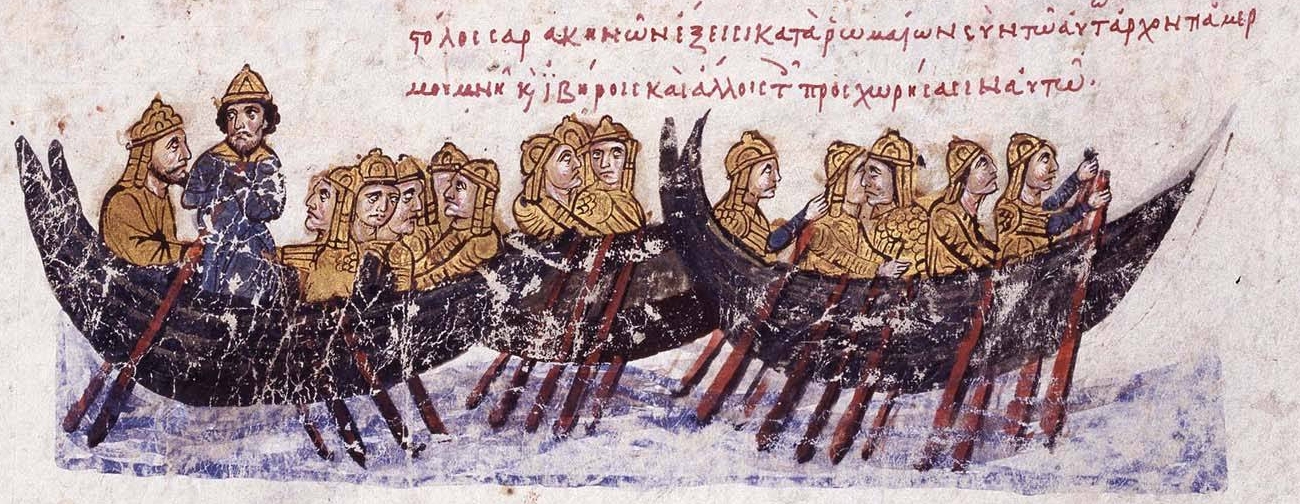
 In 818, Emir Al-Hakam I of Cordoba faced a revolt from al-Ribad, one of the large suburbs of the city (at the time, Cordoba was one of the biggest cities in the world, having nearly half a million people). The people were upset by Hakam's harsh tax policies, which he had enacted after the last revolt in 805, hoping to keep the people poor and helpless.
Unfortunately for the rebels, their attempt to storm the palace was easily defeated, and many of the mob were slaughtered in the streets. After torturing and executing the ringleaders, Hakam took the extreme measure of rounding up and exiling every resident of al-Ribad, about 60,000 people. Hakam was not one to put up with that kind of shit, apparently. Most of the exiles moved to Morocco, but a large number, perhaps as many as 10,000, took up Mediterranean piracy.
Led by Abu Hafs, this pirate band, along with their families and their former neighbors, invaded and occupied the Egyptian city of Alexandria, intending to make it their new home. The rulers of Egypt, of course, were not on board with this plan. You can't just sail up to one of the most famous and important cities in the world and declare yourselves the new owners.
The Egyptians quickly marshaled their forces and besieged the city, reclaiming it about a year later. So, the Cordobans set out again looking for a new home, and arrived at the island of Crete, then part of the Byzantine Empire. After defeating the local garrisons, they set up shop on the island, and built the fortress of Chandax as their new capital.
Although the Byzantines sent several military expeditions to reclaim the island, the Cordobans successfully defended their new home for well over 100 years. During that time, they launched raids across the Aegean sea, and occupied several smaller islands nearby. It wasn't until 961 that Nikephoros II Phokas, one of the great generals of Byzantine history, and later a Byzantine Emperor, was able to retake Crete and drive the Cordobans out for good. Today, over 1,000 years after their defeat, Chandax (now called Heraklion) remains the capital of the island.

